First-Time Homebuyer Checklist & Guide (2026)
Buying your first home is one of the biggest financial decisions of your life. It does not have to be overwhelming — but it does require a plan. This guide walks you through every step of the process from the very beginning, with a practical checklist you can follow from six months out all the way through closing day.
At First Commerce Financial we have been helping first-time homebuyers in Michigan, Florida, Arizona, and Texas since 2007. No junk fees, no pressure — just straight answers and the lowest rate we can find for your situation.
The First-Time Homebuyer Checklist — Step by Step
Most first-time buyers underestimate how much preparation goes into buying a home. The buyers who have the smoothest experience are the ones who start preparing months before they plan to buy. Here is your complete checklist organized by timeline.
- Check your credit score. Pull your free credit report at AnnualCreditReport.com. Look for errors and dispute anything inaccurate. Most conventional loans require a 620+ score — FHA goes down to 580. The higher your score, the better your rate.
- Pay down revolving debt. Your debt-to-income ratio (DTI) is one of the most important factors in mortgage qualification. Paying down credit card balances improves both your credit score and your DTI simultaneously.
- Stop opening new credit accounts. Every new credit inquiry temporarily lowers your score. Avoid opening new cards, financing a car, or taking on new debt in the months before applying for a mortgage.
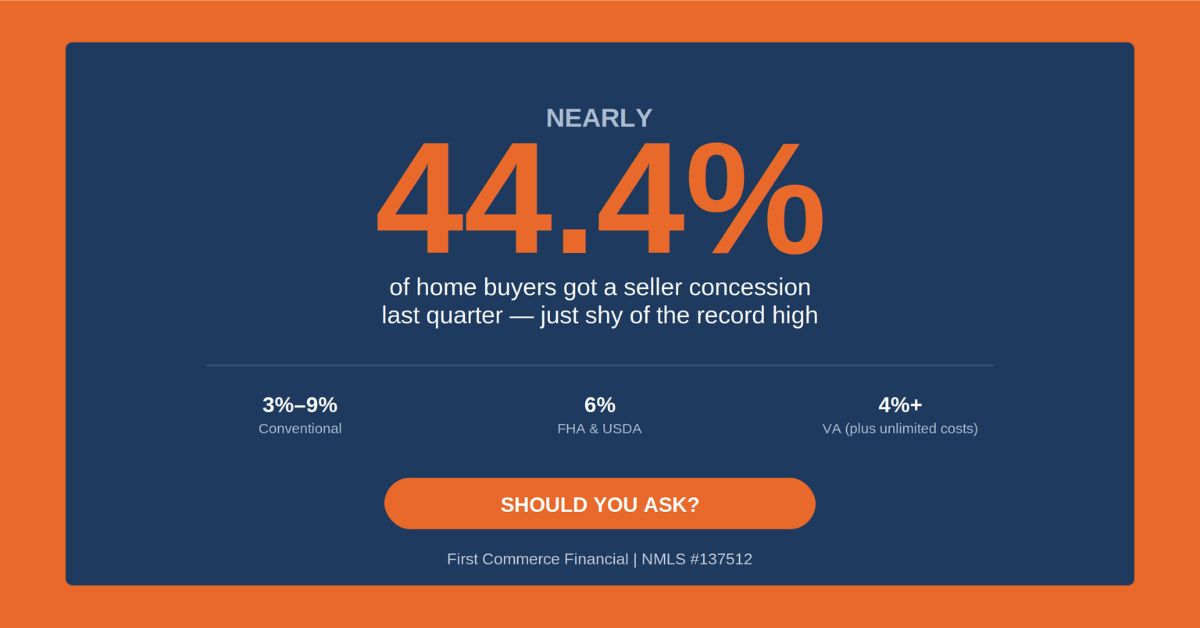
- Start saving for your down payment and closing costs. Down payment ranges from 3% to 20% depending on your loan type — VA and USDA eligible buyers may qualify for zero down. Closing costs typically add another 2–3% of the purchase price on top of that. Budget for both.
- Research neighborhoods and price ranges. Use our Free Housing Market Report by Zip Code to understand what homes cost in the areas you are targeting.
- Calculate what you can afford. Use our Purchase Power Calculator to understand your realistic price range before you start looking.
- Get pre-approved — not just pre-qualified. Pre-qualification is an informal estimate. Pre-approval is a full review of your income, assets, and credit — and it is what sellers and agents take seriously. We can typically issue a pre-approval same day or next business day.
- Gather your financial documents. You will need: last 2 years of W-2s and tax returns, last 2 months of bank statements, last 30 days of pay stubs, and photo ID. Self-employed buyers need 2 years of business returns as well.
- Choose your loan program. Conventional, FHA, VA, or USDA — each has different requirements and advantages depending on your down payment, credit score, and location. See the loan options section below.
- Find a real estate agent. A buyer's agent costs you nothing — they are compensated by the seller. Choose someone who knows your target market and communicates clearly.
- Understand total monthly costs. Your mortgage payment is not your only housing cost. Budget for property taxes, homeowners insurance, HOA fees if applicable, and maintenance. We calculate all of these into your pre-approval so there are no surprises.
- Make a competitive offer. In most markets, well-priced homes still move quickly. Having your pre-approval letter ready means you can submit an offer immediately when the right home comes up.
- Include an inspection contingency. Never waive a home inspection. A professional inspection typically costs $300–$500 and can reveal thousands of dollars in issues — or give you negotiating leverage with the seller.
- Understand what you are buying. Review the seller's disclosure carefully. Ask your agent about any red flags in the inspection report. Know what is staying with the home and what is not.
- Lock your interest rate. Once you are under contract, talk to us about locking your rate. Rate locks typically run 30–60 days — long enough to get through closing in most cases.
- Get homeowners insurance quotes. You will need a policy in place before closing. In Florida especially, get insurance quotes early — it can take time and the cost significantly affects your monthly payment.
- Respond to lender requests immediately. Once you are under contract and your loan is in process, your lender will request additional documents. Respond the same day whenever possible — delays in documentation are the #1 cause of closing delays.
- Do NOT make any large purchases. Do not buy a car, open a new credit card, or make any large deposits that cannot be documented. Any change to your financial picture during the loan process can affect your approval.
- Review your Loan Estimate carefully. You will receive a Loan Estimate within 3 business days of your full application. Review every line — especially origination fees, third-party fees, and your interest rate. Call us if anything looks different from what was quoted.
- Schedule your final walkthrough. Do a final walkthrough of the property 24–48 hours before closing to confirm the condition matches what was agreed and that all agreed repairs were completed.
- Review your Closing Disclosure. You will receive a Closing Disclosure at least 3 business days before closing showing your final loan terms and closing costs. Compare it line by line to your Loan Estimate.
- Bring your photo ID. You will need a government-issued photo ID — driver's license or passport.
- Wire your closing funds in advance. Your closing attorney or title company will give you wiring instructions. Wire the funds the day before if possible — never wire money based on last-minute email instructions without verifying by phone first (wire fraud is a real threat in real estate transactions).
- Sign your documents. Closing typically takes 60–90 minutes. You will sign a large stack of documents — ask questions about anything you do not understand before signing.
- Get your keys. Once funding is confirmed, you are a homeowner. Congratulations.
First-Time Homebuyer Loan Options
Choosing the right loan program is one of the most important decisions in the homebuying process. Here is a straightforward breakdown of your main options:
Conventional Loans
As little as 3% down for first-time buyers. Best rates for buyers with 700+ credit scores. Private mortgage insurance (PMI) required if down payment is under 20% — but PMI drops off once you reach 20% equity.
FHA Loans
3.5% down with a 580+ credit score. More flexible qualification standards. Mortgage insurance is required for the life of the loan in most cases. Good option for buyers with lower credit scores or limited savings.
VA Loans
Zero down payment for eligible veterans and active-duty military. No private mortgage insurance. Competitive rates. One of the best mortgage products available — if you have served, use this benefit.
USDA Loans
Zero down payment for eligible properties in qualifying rural and suburban areas. More addresses qualify than most buyers realize — especially in Michigan and parts of Florida, Arizona, and Texas. We check USDA eligibility for every buyer.
Free Tools to Help You Plan
🏠How Much Home Can I Afford? — Free Purchase Power Calculator 📊Free Housing Market Report by Zip Code 💳Free Debt Reduction Calculator — Create Your Payoff Plan 💰What Is the Average Down Payment for a Home?Frequently Asked Questions
How much do I need for a down payment as a first-time buyer?
It depends on your loan type. Conventional loans allow as little as 3% down for first-time buyers. FHA loans require 3.5% with a 580+ credit score. VA and USDA loans offer zero down payment for eligible buyers. On top of your down payment, budget 2–3% of the purchase price for closing costs. So on a $300,000 home, a conventional buyer might need $9,000 down plus $6,000–$9,000 in closing costs — roughly $15,000–$18,000 total to close.
What credit score do I need to buy a home?
Most conventional loans require a minimum 620 credit score. FHA loans go down to 580 with 3.5% down, or as low as 500 with 10% down. VA loans do not have a hard minimum set by the VA, though individual lenders typically require 580–620. The higher your credit score, the better the interest rate you will qualify for — improving your score from 680 to 740 before buying can save you tens of thousands of dollars over the life of a 30-year loan.
How long does it take to buy a home?
From accepted offer to closing typically takes 30–45 days. The pre-approval process with First Commerce Financial usually takes same day to next business day. Finding the right home varies — some buyers find a home in a week, others take several months. Planning for a 3–6 month process from when you start seriously preparing to when you close is a reasonable expectation for most first-time buyers.
Should I get pre-approved before finding a real estate agent?
Yes — get pre-approved first. Knowing your exact budget shapes every other decision, including which neighborhoods to focus on and which agent to work with. Many real estate agents will also ask for proof of pre-approval before spending significant time with a buyer. It takes one conversation with us and typically less than 24 hours to have a pre-approval letter in hand.
What is the difference between pre-qualification and pre-approval?
Pre-qualification is an informal estimate based on self-reported information — it carries very little weight with sellers. Pre-approval involves a full review of your income documents, bank statements, and credit — it is a real commitment from the lender that you qualify up to a certain loan amount. In today's market, sellers expect to see a pre-approval letter, not a pre-qualification. We issue pre-approvals, not pre-qualifications.
What are closing costs and how much should I budget?
Closing costs are the fees associated with finalizing your mortgage and transferring ownership of the property. They typically include lender fees, title insurance, appraisal, attorney fees, prepaid property taxes and insurance, and recording fees. At First Commerce Financial we charge zero junk fees — no processing fees, no administrative fees. Total closing costs typically run 2–3% of the purchase price depending on your state and loan type. You will receive a Loan Estimate within 3 business days of your full application showing every cost itemized.
Ready to Get Started?
Talk directly with Kirk or Ken — over 60 combined years of mortgage experience, zero junk fees, and a pre-approval you can have in hand same day or next business day. No pressure, no obligation.
Start Your Free Pre-Approval
Related Posts