Why Home Affordability Is Broken — And the Flood Insurance Crisis Nobody Is Talking About
Existing home sales in the United States have been sitting near 1995 levels for over three years. Let that sink in. We have 100 million more people in this country than we did in 1995 — and we are selling the same number of homes. That is not a housing market slowdown. That is a housing market that has fundamentally broken for a large segment of the population.
The conversation about affordability almost always focuses on mortgage rates and home prices. Those matter — but they are only part of the story. What has actually crushed housing affordability is the convergence of five separate cost explosions happening simultaneously, while wage growth has failed to keep pace with any of them. And in Florida and other coastal markets, a growing flood insurance crisis is now making some properties effectively unfinanceable entirely.
— Kirk Chivas, Co-Founder, First Commerce Financial | 28 years in mortgage lending
I have been doing this since 1997. I have never seen an environment quite like this one. It is not just that homes got expensive — that has happened before and recovered. What is different this time is that every single line item in the cost of homeownership exploded at the same time. Mortgage rates doubled. Home prices went up 40-50%. Insurance premiums in Florida and other states tripled. Property taxes reset to new assessed values. HOA fees climbed. And wages — for most people — did not come close to keeping up with any of it.
The people sitting on the sidelines are not being unreasonable. They are doing the math correctly.
The Five Cost Explosions Nobody Is Talking About Together
Every one of these cost increases has been covered individually in the financial press. What is almost never discussed is what happens when all five hit a buyer at the same time — which is exactly the situation facing homebuyers in Michigan, Florida, Arizona, and Texas right now.
1. Mortgage Payments — The Rate Shock
In January 2021, a buyer purchasing a $350,000 home with 5% down at 2.75% had a principal and interest payment of approximately $1,363 per month. Today, the same home at $475,000 (reflecting appreciation) at 6.5% carries a payment of approximately $2,870 per month. That is $1,507 more per month — $18,084 more per year — for the same house. To qualify for that payment at today's rates and a 43% DTI, a buyer needs roughly $80,000 in annual gross income just for the mortgage — before taxes, insurance, HOA, or any other debt.
2. Property Taxes — The Appreciation Hangover
Property taxes are assessed based on home values. When home values went up 40-50% between 2020 and 2023, property tax assessments followed — often with a lag of 1-2 years that is now fully catching up. A homeowner in a Detroit suburb who bought in 2019 for $280,000 and saw their home assessed at $420,000 in 2023 is now paying taxes on a value 50% higher than their purchase price. In Florida, Sarasota County and Manatee County property tax bills on newly purchased homes at current values are significantly higher than on comparable homes purchased pre-pandemic. This is not a small rounding error — it is hundreds of dollars per month for many buyers.
3. Homeowners Insurance — The Crisis Nobody Expected
Homeowners insurance has become a genuine crisis in Florida — and it is spreading. Multiple major insurers have pulled out of the Florida market entirely. Those that remain have raised premiums dramatically. A homeowner in Lakewood Ranch or Sarasota who was paying $2,400 per year in 2019 may now be paying $6,000-$8,000 or more. In Michigan, insurance increases have been more modest but still meaningful. In Arizona and Texas, wildfire and severe storm risk is driving premium increases that were unheard of five years ago. For many buyers doing affordability math, insurance has gone from a rounding error to a $400-$600 per month line item.
3b. Flood Insurance — The Hidden Crisis Destroying Coastal Affordability
Flood insurance deserves its own section because it is not just expensive — in many coastal and high-risk areas it is completely unavailable, and that is a crisis the mainstream housing conversation almost entirely ignores.
Flood insurance in Florida is a separate policy from homeowners insurance — and in many areas it is now mandatory for mortgage approval. The National Flood Insurance Program (NFIP) has undergone significant rate increases under Risk Rating 2.0, the new pricing methodology implemented in 2022. Properties that were paying $800-$1,200 per year are now seeing premiums of $3,000-$8,000 or more annually depending on elevation, flood zone, and distance from water.
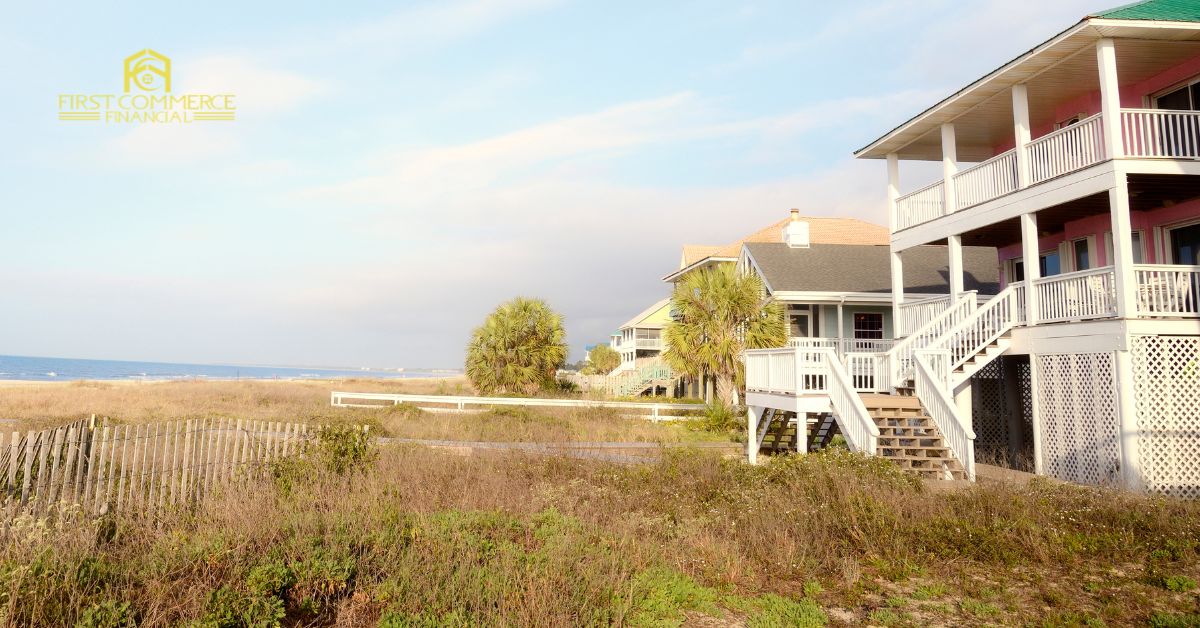
But the rate increases are only part of the story. The more alarming development is insurers exiting the market entirely. In coastal Florida — from Jacksonville Beach to Sarasota to Naples — many beachfront and waterfront properties simply cannot obtain private flood insurance at any price. The NFIP remains a backstop but with strict coverage limits of $250,000 on the structure and $100,000 on contents. For a $700,000 waterfront home, that coverage gap is catastrophic.
The real-world impact on homebuyers is severe:
- Properties in FEMA Special Flood Hazard Areas (SFHA) require flood insurance as a condition of any federally backed mortgage — conventional, FHA, VA, and USDA
- Flood insurance costs must be factored into your debt-to-income ratio just like property taxes and homeowners insurance
- Some lenders are now declining to finance properties in certain high-risk flood zones regardless of insurance availability
- Cash buyers are increasingly the only buyers for some coastal properties — because financed buyers cannot get the required insurance to close
- Properties that cannot be insured at all are effectively unsellable to anyone using a mortgage — which is destroying value for current owners who had no warning this was coming
This is not a distant theoretical risk. Kirk spent six years in Lakewood Ranch and has watched this issue accelerate across the Sarasota-Bradenton corridor and beyond. The insurance availability crisis is one of the most underreported and most consequential forces reshaping Florida real estate — and it is not going away.
Before you make an offer on any Florida property near water, a canal, a retention pond, or in a low-lying area — get the flood zone designation, get a flood insurance quote, and make sure the number fits your budget. We have seen buyers get all the way to the closing table and discover their flood insurance quote is $800 per month. That is not a rounding error. That is a deal-breaker.
4. HOA Fees — The Hidden Monthly Obligation
HOA fees have increased across the board — driven by higher labor costs for maintenance and landscaping, higher insurance costs for common areas, deferred maintenance finally being addressed, and reserve fund contributions catching up after years of underfunding. In master-planned communities like Lakewood Ranch in Florida, buyers face both HOA fees and CDD (Community Development District) fees — a combination that can add $500-$1,200 per month to carrying costs that are not always prominently disclosed in builder marketing. In many Michigan condo and townhome communities, HOA fees that were $250/month five years ago are now $375-$450/month. These fees count in your debt-to-income ratio just like a debt payment — directly reducing the mortgage amount you qualify for.
5. Maintenance & Operating Costs — The Invisible Budget Killer
The cost of maintaining a home has increased dramatically since 2020 — driven by labor shortages in skilled trades, material cost inflation, and supply chain disruptions that have partially normalized but not fully reversed. A roof replacement that cost $8,000 in 2019 now costs $14,000-$18,000 in many markets. HVAC systems, water heaters, and appliances have all increased in cost. Plumbers, electricians, and general contractors are harder to find and more expensive when you do. The standard guidance has always been to budget 1-2% of your home's value annually for maintenance — on a $475,000 home, that is $4,750-$9,500 per year, or $396-$792 per month. At current home values, this number has become genuinely significant in household budgets.
The Real Monthly Cost of Homeownership in 2026
When you add all five cost categories together, the true monthly cost of owning a median-priced home in many markets is dramatically higher than the mortgage payment alone suggests. Here is an honest picture for a $450,000 home in Metro Detroit — one of the more affordable major markets in the country:
True Monthly Homeownership Cost — $450,000 Home, Metro Detroit, 5% Down
| Cost Component | Monthly Amount | Notes |
|---|---|---|
| Principal & Interest (6.5%) | $2,717 | 30-year fixed, $427,500 loan |
| PMI (until 20% equity) | $178 | Approx 0.5% of loan amount annually |
| Property Taxes | $525 | Approx 1.4% annually — varies by municipality |
| Homeowners Insurance | $175 | Michigan average — significantly higher in FL |
| HOA Fees | $200 | If applicable — many communities have none |
| Maintenance Reserve | $375 | 1% of value annually — often ignored in budgets |
| True Monthly Cost of Ownership | $4,170 | vs. $2,717 mortgage payment alone |
The mortgage payment is $2,717. The true cost of ownership is $4,170 — 53% higher. To afford $4,170/month in housing costs at a 30% housing ratio, a buyer needs approximately $167,000 in gross annual household income. The median household income in Michigan is approximately $65,000.
Why Wages Have Not Kept Up
Wage growth since 2020 has been real — in many sectors, significantly so. But it has not kept pace with the compounding effect of all five cost increases happening simultaneously. A household that earned $85,000 in 2020 and now earns $95,000 — a 12% increase over four years — has seen their potential housing costs increase by 50-80% over the same period. The math simply does not work for a large segment of the workforce, and pretending otherwise does not help anyone.
This is particularly acute for:
- First-time buyers who have no existing home equity to deploy and are entering the market at current prices with current rates
- Existing homeowners who want to move but are locked in by their sub-3% mortgage rate — selling means giving up a payment they can never replace
- Retirees on fixed incomes whose Social Security and pension income has not kept pace with the explosion in property taxes and insurance
- Single-income households in markets like Metro Detroit where median home prices now require dual incomes to qualify comfortably
The Lock-In Effect — Why Existing Sales Are at 1995 Levels
There is a second dimension to the affordability crisis that does not get enough attention: the lock-in effect. Approximately 60% of existing mortgage holders have rates below 4%. Many have rates below 3%. These homeowners — who might otherwise sell and move up, move down, or relocate — are effectively trapped. Selling their home means giving up a $1,800/month payment and taking on a $3,200/month payment for the same housing. Many simply will not do it.
This means inventory stays suppressed even as demand weakens. Prices stay elevated even as volume collapses. We have a market where almost nobody can buy and almost nobody wants to sell — which is exactly how you end up at 1995 transaction volumes with 100 million more people in the country.
What Can Actually Be Done
We are not in the business of false optimism. But there are genuine strategies that help buyers navigate this environment — and we use all of them.
Shop Your Rate Aggressively
As an independent broker we shop dozens of wholesale lenders. A 0.5% rate difference on a $400,000 loan is over $100/month and $36,000 over 30 years. Never accept the first rate you are quoted.
Use Builder Buydown Incentives
In new construction markets builders are offering 2-1 and 3-2-1 rate buydowns. A 2-1 buydown on a $400,000 loan saves approximately $500/month in year one. Free money — evaluate it carefully before declining.
Budget for True Ownership Cost
Do not budget based on the mortgage payment alone. Run the full picture — taxes, insurance, HOA, maintenance — before you decide what you can afford. We do this for every buyer we work with.
Consider Adjacent Markets
The zip code two miles over may have meaningfully lower property taxes, no HOA, and lower insurance costs. Running the true cost comparison across multiple areas often reveals surprising value differentials.
Reduce Debt Before Applying
Every dollar of monthly debt payment reduces your mortgage qualification. Paying off a $250/month car loan before applying can increase your buying power by $40,000 or more at current rates.
Plan for the Refinance
If rates do come down — and most economists expect some moderation — buyers who purchased at today's rates will have refinance opportunities. Buy the home, refinance the rate. Do not wait indefinitely for perfect conditions.
Free Tools to Run Your Numbers
🏠Purchase Power Calculator — See What You Can Actually Afford 🧮Mortgage Calculator — Estimate Your Full Monthly Payment 💳Debt Reduction Calculator — Improve Your Qualification Before Applying 📋Monthly Spending Worksheet — Know Your Real Budget 🔧All Free Tools & CalculatorsFrequently Asked Questions
Is it still worth buying a home in this environment?
That depends entirely on your specific financial situation, your market, your timeline, and your alternatives. For buyers who are financially ready, plan to stay for 5+ years, and have done the math on true ownership costs — buying can still make sense. For buyers who are stretching to qualify and have not accounted for taxes, insurance, and maintenance, buying right now may not be the right move. We will always give you an honest answer based on your specific numbers — not a cheerleading answer designed to get you into a loan.
Will home prices come down significantly?
Most economists do not expect significant nationwide price declines — the structural supply shortage that drove prices up is real and not easily resolved. Specific markets and price points may see corrections, and some already have. But the combination of limited inventory, population growth, and undersupply in most major metros provides a floor under prices that did not exist in 2008. Modest price softening in some markets is likely. A correction back to 2019 prices is not the consensus expectation.
Should I wait for rates to come down before buying?
This is the most common question we hear and there is no universal answer. If rates drop significantly — say to the 5% range — it is likely that home prices will increase as demand surges back into the market. You may save on the rate but pay more for the home. There is also no guarantee of when or how far rates will fall. If you find a home you can genuinely afford at today's rates, the ability to refinance later is a real option. If you cannot comfortably afford the payment at today's rates, waiting may be the right call.
How do I know what I can really afford?
Start with a pre-approval to know your qualification ceiling — but do not confuse what you qualify for with what you can comfortably afford. Use our Purchase Power Calculator and then add estimated property taxes, insurance, HOA fees, and a maintenance reserve to the mortgage payment. That full number is what you need to be able to sustain month after month. We walk every buyer through this complete picture before they start shopping. Call us — it takes 20 minutes and it could save you from a decision you will regret.
Get an Honest Assessment of What You Can Afford
Not a cheerleading session. Not a pitch to get you into the biggest loan possible. Kirk and Ken will run your complete numbers — mortgage, taxes, insurance, HOA, everything — and give you a straight answer about what makes sense for your specific situation. No pressure, no obligation.
Talk to Us — It Is Free
Related Posts